The EU–Mercosur agreement has highlighted a simple reality: there will be more options in the market. For professional buyers, that does not just mean more supply. It means a greater need to choose with clear criteria, reduce risk, and work with suppliers who can prove what they promise.
That is where Spanish organic produce (and specifically Almería as a key origin for vegetables) holds a competitive edge: not because of marketing, but because of compliance, audits, traceability, and certifications that many retailers and distributors already require as a baseline.
At Siiimply Veggy, we work with that exact logic: helping you buy with confidence. Less uncertainty. More control. And supply aligned with European standards—supported by the same framework buyers often refer to as EurepGAP GlobalGAP when discussing farm assurance.
What Changes with Mercosur: More Options, More Requirements
With more origins competing, buyers face two challenges:
- Comparing products that look the same on a commercial spec sheet, but are not the same in terms of documentation and compliance.
- Justifying the purchase internally (quality, compliance, ESG, customer audits, etc.).
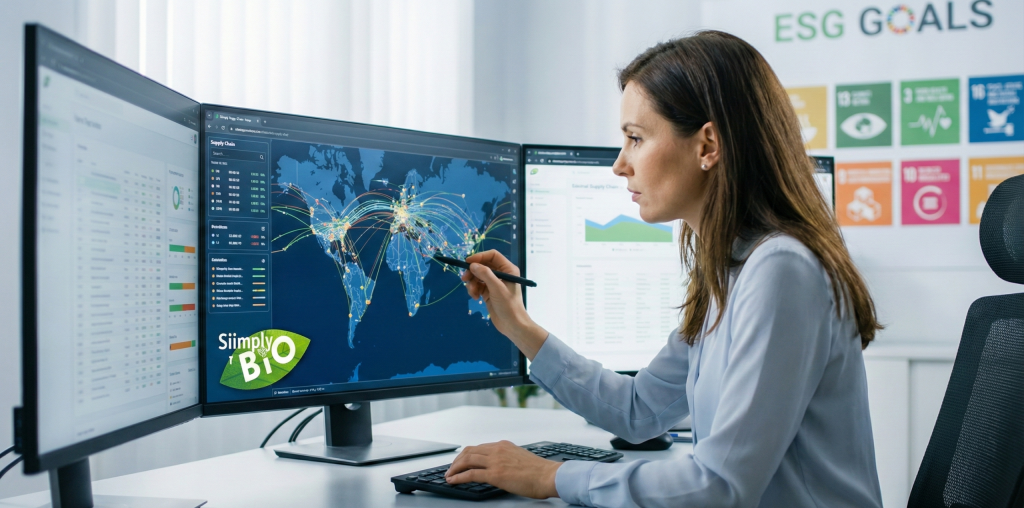
In this scenario, what carries real weight is what you can prove with evidence:
- Traceability of lots and processes.
- Third-party audits.
- Good practice protocols.
- Responsible management (social, water, waste, food safety).
If you buy for supermarkets, wholesale distribution, or foodservice, you know how this works: the product can be fine today, but you need it to be fine every time, and you need to be able to justify it with documentation.
Spain as a Trusted Organic Origin for Europe
Proximity and Transit Times
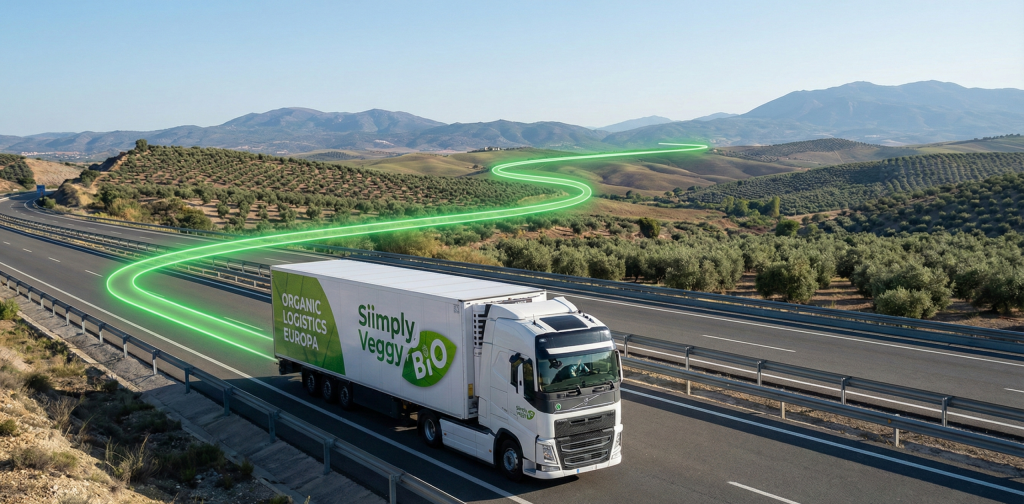
Spain has a clear logistics advantage in Europe: distance. Fewer days in transit usually translates into:
- better shelf life,
- less shrink,
- more stable quality,
- more ability to react if demand changes.
This matters especially in organic, where product value is higher and a logistics issue costs more.
A Framework Built on Requirements and Control
Organic in Europe does not work by declaration. It works through controls, requirements, and verification. As a buyer, when you choose Spain, you are choosing an origin used to operating under European rules and frequent channel audits.
Key Certifications That Make the Difference
In international purchasing, certifications function like a shared language. They allow you to compare suppliers using consistent criteria and reduce the risk of surprises—especially when sourcing from Spanish growers and exporters of fresh fruit and vegetables for demanding retail programs.
From EurepGAP to GlobalG.A.P.: the Reference Standard
Many buyers still use the term EurepGAP because it was the original name of the scheme. Today, the most widely used framework is GlobalG.A.P., and in practice it is used as a reference for:
- Good agricultural practices.
- Food safety.
- Process control.
- Traceability.
Put simply: GlobalG.A.P. provides a baseline that lets you require order, records, and control at origin—often referenced in the trade as EurepGAP GlobalGAP when setting supplier requirements.
GRASP: Verifiable Social Practices
The GRASP module adds a social layer: it assesses practices related to working conditions and organization. For European companies with responsible sourcing policies, this is no longer optional—it is a supplier criterion.
If you want a clear explanation of GlobalG.A.P., GRASP, and SPRING, here it is:
What it means to hold the GlobalGAP, GRASP or SPRING certificate

SPRING: Responsible Water Management
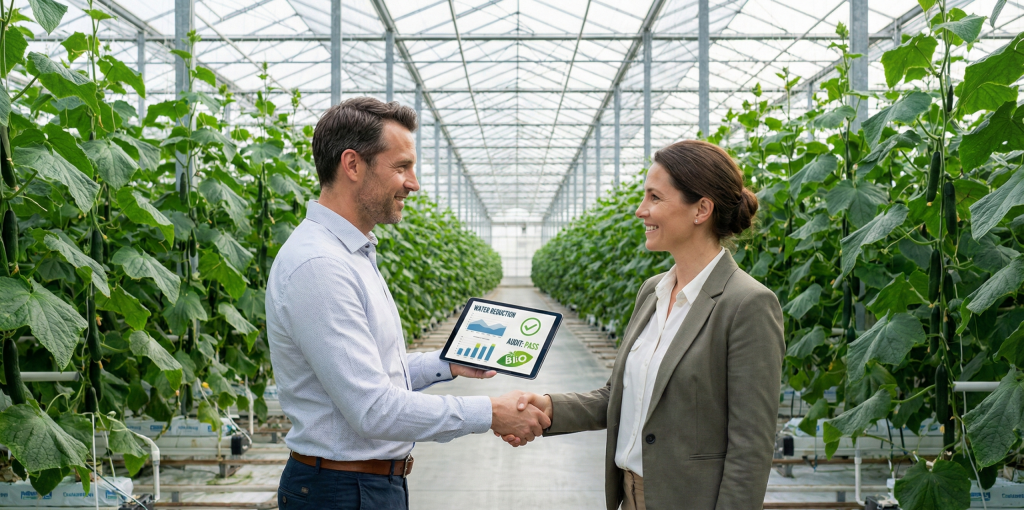
SPRING focuses on water management and water sustainability. In a context where buyers include environmental targets and ESG reporting, this type of certification strengthens the purchase: you are not only buying product, you are also buying a way of producing aligned with what the market demands.

What the Buyer Gains When the Supplier Is Certified
When you choose an organic supplier in Spain with active certifications, you are not only buying product. You are buying less friction in your operations.
Fewer Incidents and Claims
A certified supplier works with documented processes. That usually reduces typical issues that end up as claims.
It does not eliminate risk 100%, but it reduces it in a real way. And, above all, it allows you to react quickly if something needs investigation.
Easier Internal Audits and Retail Customer Requirements
If you sell into retail or organized distribution, you know you may be asked for evidence at any time: specs, traceability, controls, valid certificates.
Working with certified suppliers prevents you from having to rebuild the story of every shipment. The information already exists and is standardized.
Consistency with ESG and Sustainability
More and more buyers must justify purchasing decisions using sustainability criteria. Certifications help because they turn a statement into verifiable proof.
In organic, this fits especially well: the product already has positioning linked to health and sustainability, and certifications reinforce the control and responsibility side.
Spain as a “Safe” Option for Organic Sourcing Programs
In a context of increasing competition, Spanish organic stands out for one specific reason: it is an origin used to working with demanding buyers, recurring audits, and responsible sourcing policies.
That is why, for many importers, the deciding factor is not only the origin. It is the combination:
- organic + certifications + traceability + service + continuity
And that combination is what prevents surprises.
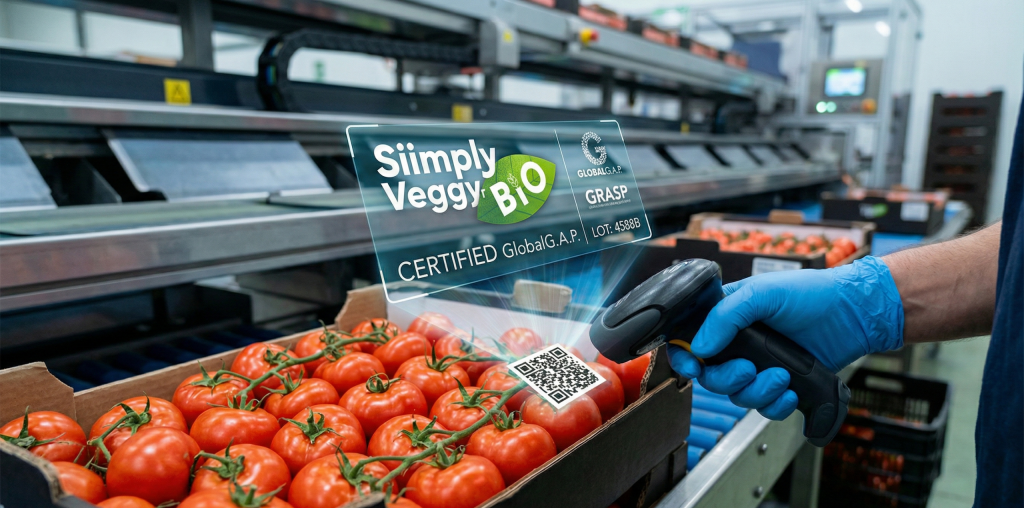
Siiimply Veggy: Organic Export from Spain with Certified Quality
At Siiimply Veggy, we work with one clear goal: to help you buy organic fruit and vegetables from Spain with security, continuity, and documentation ready for your supply chain.
That implies three operational commitments:
1) Certification and Traceability as the Standard
We do not treat certification as “something that looks good.” We treat it as a working tool. That is why we provide buyers with the information needed to operate without friction: valid certificates, traceability, and lot-level control.
You can check our up-to-date organic fruit and vegetable certifications here.
2) Responsible Management and a Compliance-First Approach
We know European buyers do not only need product: they need to comply. That is why we work with a continuous improvement approach in processes, control, and responsible management across agricultural and logistics operations.
3) Continuity and Service for Import Programs
With Mercosur in the conversation and more competition in the market, the differentiator is not promising. It is delivering: continuity of supply, consistency of quality, and a fast response when the market changes.
If you are looking for a certified organic supplier in Spain with a clear documentation approach, we speak the same language.
FAQ
1) What documents should I request from a Spanish organic supplier before closing a program?
- A valid organic certificate issued by its control body.
- Product specification and sizing/calibers.
- Lot-level traceability and delivery notes.
- Agricultural standard certificates (e.g., GLOBALG.A.P.) and applicable add-ons (GRASP/SPRING).
2) Is GlobalG.A.P. the same as “organic”?
No. GlobalG.A.P. is a good agricultural practices and traceability standard; “organic” is a regime regulated by organic production rules. They complement each other, but GlobalG.A.P. does not replace organic certification.
3) What does “EurepGAP” mean and why is the term still used?
EurepGAP was the original name of the scheme and in 2007 it was rebranded as GLOBALG.A.P.. That is why many buyers still use “EurepGAP” as a historical synonym.
4) How can I verify that a GlobalG.A.P. certificate or an add-on is active?
Ask the supplier for:
- A copy of the valid certificate (including scope and dates).
- The scheme ID/registration so you can check it in the scheme database or with the certifier.
For SPRING, the scheme documentation indicates that certification can be reflected in the GLOBALG.A.P. database.
5) What does GRASP cover and why do European retailers request it?
GRASP is a GLOBALG.A.P. add-on designed to assess social aspects at farm level: health, safety and worker welfare, “workers’ voice,” and elements related to labor rights.
6) Does SPRING also apply if the product is organic?
Yes, it can apply. SPRING is a water-focused add-on for responsible water management at farm level and is designed to be combined with the plants IFA standard (regardless of whether the product is organic or conventional).
7) If I buy organic from a non-EU origin, what extra document is typically critical to enter the EU?
For organic imports from outside the EU, a Certificate of Inspection (COI) issued through TRACES is typically required. (This does not apply in the same way when you buy within the EU, such as from Spain.)